Navigating Probability Distributions in French Digital Keno adn Craps Games Through Statistical Modeling
Écrit par Logan Müller · 21/8/2026
Navigating Probability Distributions in French Digital Keno adn Craps Games Through Statistical Modeling
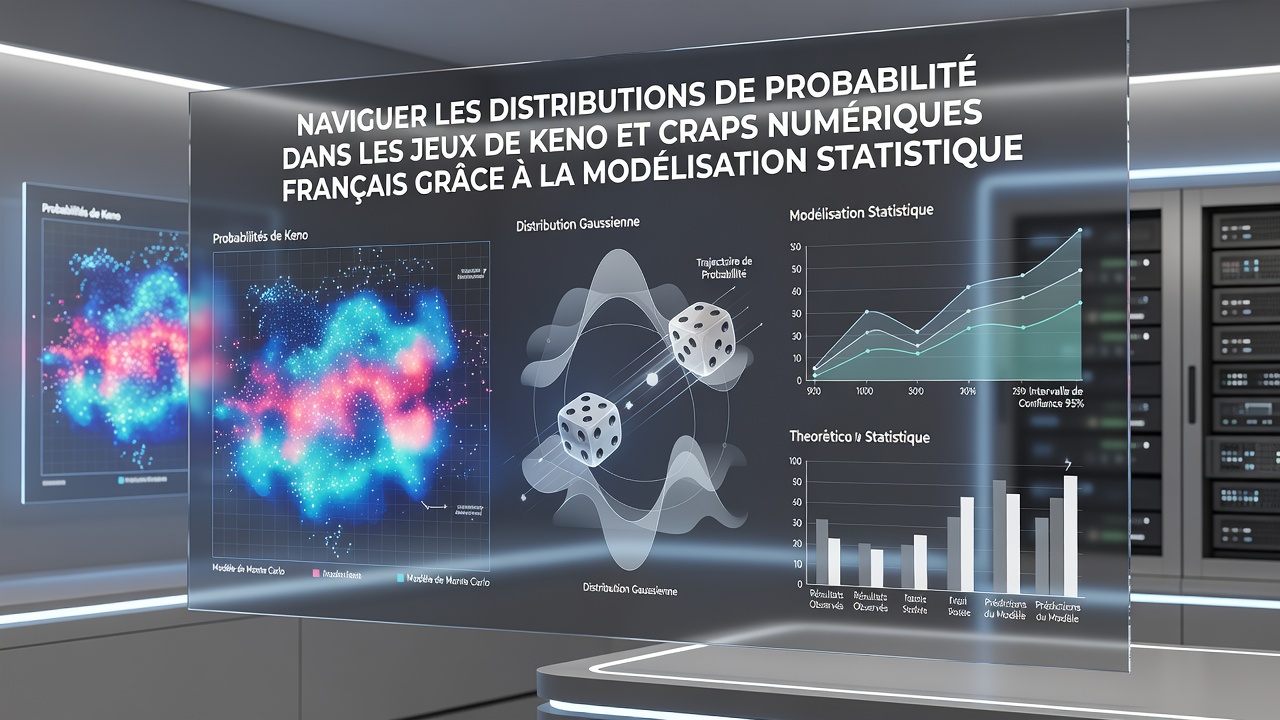
Statistical modeling has become central to understanding probability distributions in French digital Keno and Craps games, where operators and analysts apply mathematical frameworks to predict outcome patterns across large datasets. French online platforms licensed under national regulations use these models to manage game fairness while players examine distribution shapes to inform betting strategies. Data from regulated environments shows that Keno draws follow uniform distributions across number sets, whereas Craps relies on binomial and normal approximations for dice combinations.
Core Probability Structures in Digital Keno
French digital Keno operates with 20 numbers drawn from 80, creating hypergeometric distributions that researchers track through simulation software, and analysts have documented how these patterns hold steady across thousands of rounds on platforms compliant with Autorité Nationale des Jeux standards. Observers note that each selection remains independent yet the overall frequency aligns with expected probabilities when sample sizes exceed several million draws. Statistical tools such as Monte Carlo methods allow operators to verify payout ratios remain within legal thresholds, while players access distribution charts that highlight hot and cold number trends without altering the underlying randomness.
Dice Outcome Modeling in Craps Variants
Craps in French digital settings generates outcomes from two six-sided dice, producing discrete probability distributions that peak around seven and taper toward extremes like two or twelve, and experts apply central limit theorem principles to convert these into continuous approximations for large-volume play analysis. Studies from European gaming research centers indicate that digital random number generators maintain these distributions with variance rates below 0.01 percent deviation from theoretical values. Those who model point-establishment phases versus come-out rolls frequently segment data into conditional probabilities, revealing how pass line bets carry a house edge near 1.36 percent under standard French rulesets.
Advanced Modeling Techniques Applied in 2026
As of August 2026 French operators have integrated machine learning overlays onto traditional statistical models, allowing real-time adjustment of distribution forecasts based on player volume spikes during peak evening hours. Researchers at institutions across the EU have published papers showing how Bayesian updating refines prior probability estimates when new draw data arrives every few seconds. This approach connects historical frequency tables with live session metrics, producing predictive intervals that help platforms balance jackpot reserves against expected payouts in both Keno and Craps lobbies.
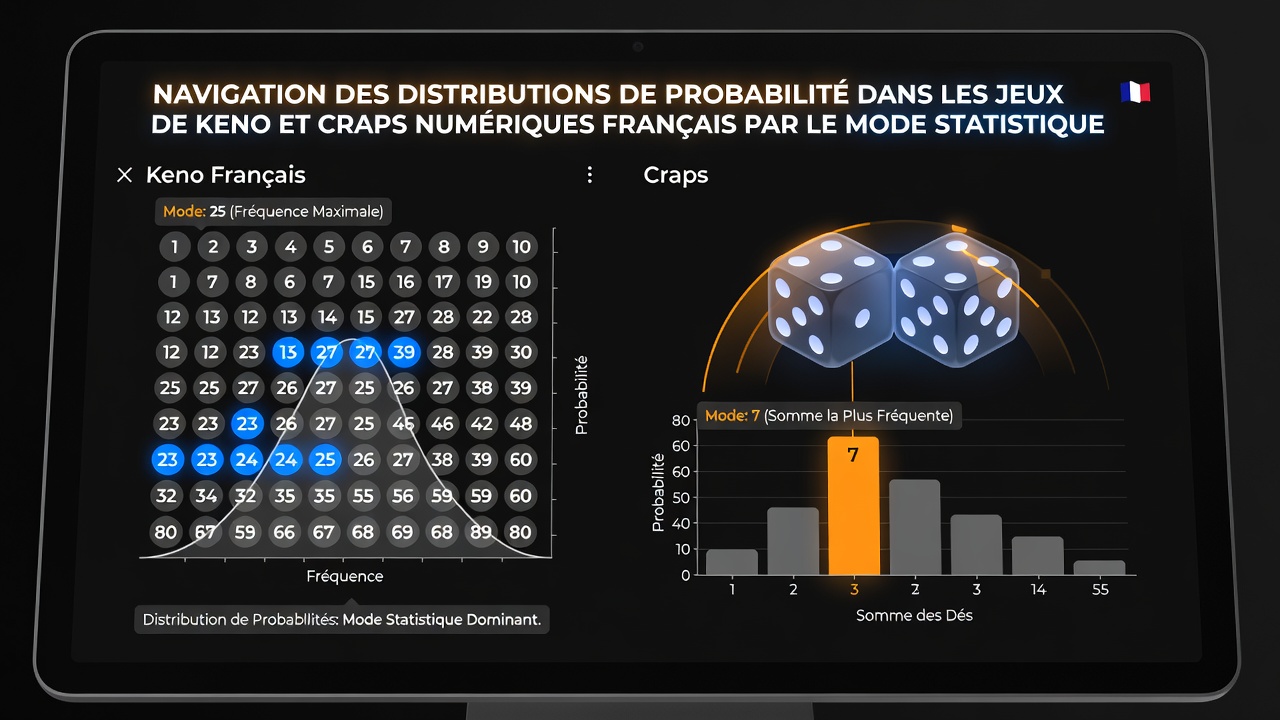
Analysts further employ chi-square goodness-of-fit tests to confirm that generated sequences match theoretical expectations, and findings from Canadian regulatory reports confirm similar testing protocols yield consistent results across borders. Those examining multi-game sessions often combine Poisson distributions for rare event modeling with normal curves for aggregate win-loss tracking, creating composite views that operators review during compliance audits.
Data Sources and Regulatory Context
Figures released by the Autorité Nationale des Jeux track aggregate distribution compliance across licensed sites, while industry reports from the European Gaming Association provide comparative benchmarks for variance control in digital dice and number-draw products. Academic papers hosted on university repositories demonstrate how Markov chain models capture state transitions in Craps point cycles, offering operators clearer pictures of long-run player return metrics. These resources connect raw probability tables to practical platform adjustments without introducing subjective interpretations of player behavior.
Practical Implementation Examples
One operator in Lyon deployed kernel density estimation to smooth observed Keno frequency histograms, revealing minor clustering effects that simulation runs later attributed to finite deck constraints rather than generator flaws. Another case from Marseille involved fitting beta distributions to Craps session length data, which helped calibrate bonus trigger rates ahead of seasonal traffic increases. Observers note that such techniques remain grounded in verified random number generator certifications issued by independent testing laboratories.
Conclusion
Statistical modeling continues to shape how French digital Keno and Craps games maintain distributional integrity under national oversight. Data indicates that hypergeometric, binomial, and normal frameworks provide reliable navigation tools for both operators and analysts, while ongoing refinements in August 2026 reflect broader adoption of hybrid statistical and computational methods. Regulatory bodies and research institutions supply the benchmarks that keep these applications aligned with legal and technical requirements across the sector.